Author: Gale

  • Say goodbye to wet battery

    I have had a lot of battery problems with my motorcycle. The hose came off the battery and dripped acid down the right side of the engine, ate through the coil covers and resulted in a new battery, coils, and spark plugs — under warranty. The service folks didn’t put a clamp on the hose to keep it on the battery and more acid spilled all over the battery compartment.

    One of the caps came off a year old battery and the cell went dry. The motorcycle has had 3 wet batteries in 3 years.

    Yesterday I went out to get on the bike to meet a friend for a ride and the battery was completely dead and wouldn’t even jump start — my fault since I’d left my GPS turned on. But  I officially gave up on wet batteries and researched how to get a AGM battery into it.

    I love the forums where people say “no big deal — a 30 minute job.” Four hours later I was just putting the tools away. NOT a 30 minute job to remove all the plastic, the snorkel, the air filter, the battery, and the battery compartment. Nor a 30 minute job to figure out how to bend the metal on the battery compartment to accommodate a slightly larger battery.

    The AGM is great and I’m glad I made the change. I bought the battery from a local Deka dealer and got it at a great price. They said it should be good for five years.

    TEXAS INDUSTRIAL EQUIPMENT
    1724 TRINITY VALLEY DRIVE
    CARROLLTON, TX 75006
    PAT MONTOUX/ JIMMY HILTON
    Phone : 972-488-9600
    Email : jimmy@batterypowered.com/pat@batterypowered.com
  • Cooking while camping on motorcycle trip – review

    There are several things we took that worked out great.

    Pre-Trip Preparation

    I purchased a food dehydrator – I didn’t spend a lot of money on a dehydrator, but after researching made sure I got one with a fan to circulate the air as the food is drying — it speeds the process and dries the food more evenly. Drying takes a while so this is a project to start well before the start date of the trip, but the dried food was light to pack, rehydrated well, and was a healthy, economical alternative to packaged meals.

    To help with drying food I got information from Backpacking chef.com – Chef Glen has dehydrating instructions, recipes for breakfast, supper, dessert, and bark, and cheerfully answers any questions you may send him by email. We even dried ground beef using Chef Glen’s instructions and we able to use it until the end of our two month camping motorcycle trip. Great information.

    I would recommend Backpack Gourmet by Linda Frederick Yaffe – great instructions, great suggestions, and great recipes for dishes to dry and pack. Each recipe includes how heavy the finished portion will be to pack.

    Cooking on the Trip

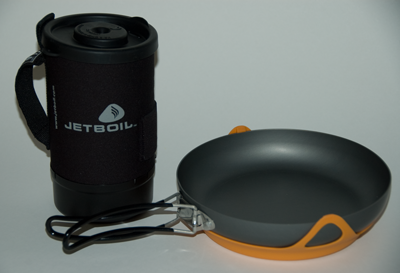
    I already liked my Jet Boil for my single use, but we used it a lot on this trip. Boil water in the morning for coffee then put a pan on to make oatmeal. Boil water for tea and then boil pasta dishes for dinner. It does have it’s limitations when a skillet is needed (the skillet can be a little small for preparing a big dish). We ended up breaking out JF’s MSR stove when the skillet was needed to prepare a meal. But overall this is an easy to light (even when it’s windy), easy to use, efficient way to heat things up when camping. I was able to find fuel cartridges along the way so I came home with 2 spares.

    If you like coffee I would recommend the Bodum Travel Coffee Press -> I wasn’t sure these would even make the packing list (I thought JF might laugh at the idea) but we ended up using them once or twice a day at least. They made wonderful coffee in the morning and tea in the evening. After that they were great drinking glasses to mix an electrolyte drink. An indication of how great they worked — JF asked if he could take one when he headed out after the trip.

  • Compression bags – review

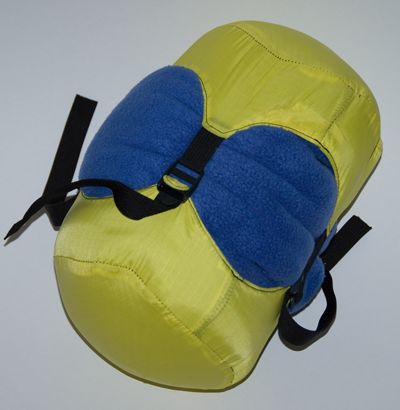
    Compression bags – After 12,000 miles my opinion is if you don’t have everything possible in a compression bag, beg, borrow, or whatever to pack what you can compressed. My relatively little 23.5 x 12 x 12 Hydra II bag carried 2 sleeping bags, 2 sleep mats, 2 fleece blankets, 2 pillows, Apollo lantern,  and fuel cans for the Jet Boil. No way this would have happened if the sleeping bags, sleep mats, pillows, and blankets weren’t compressed. I made all the compression bags custom to fit what we were taking — it takes a little ripstop nylon, webbing, and ladder lock buckles. I will never travel on the motorcycle without them. Next project is to find a way to compress clothes without trashing them.

  • Black Diamond Apollo Lantern – review

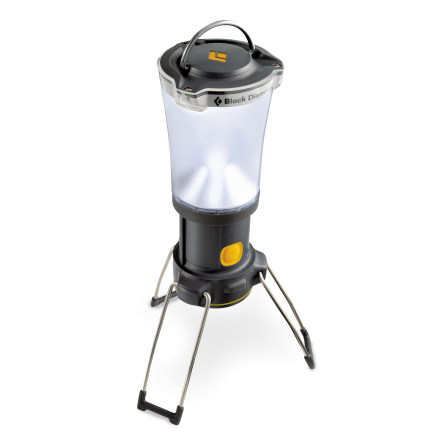
    The Black Diamond Apollo Lantern is a wonderful light to set on the picnic table or hang at the top of the tent. We were able to eat dinner, play cribbage, do dishes, all by the light of this little lantern. In two months of every night use the pack of 4 AA batteries had to be replaced one time. (Note: we both had headlamps so the lantern was not the exclusive source of light.) As advertised it’s about the size of a soup can when closed and easily tucked in between sleeping bags and sleep mats.

  • Exped Downmats – review

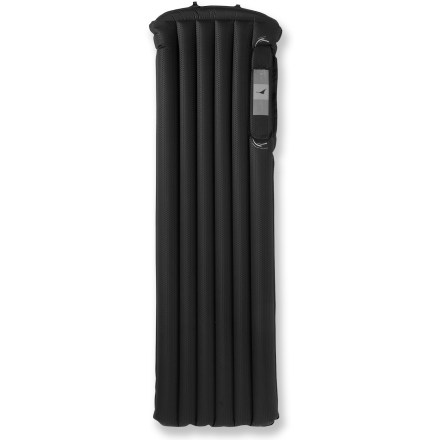
    Exped Downmat 9 & Exped Downmat Deluxe 9 – each were a little bit of a pain to inflate compared to the Thermarest self inflating, but oh what a difference. Properly inflated each is thick and comfortable and completely insulates you from ground cold. In Natashquan it got down into the 40’s and with 35 degree sleeping bags we were warm and comfortable with the Downmats. Besides comfort they each pack easily back to original size (I felt the Thermarest took a lot of work to get it compressed to original size). Ditch the bag for the Downmat 9 and use straps to secure it or it will be too big to pack. The deluxe compressed well with the compression bag that comes with it. Both take a little practice and time for both inflating and deflating, but I don’t think I would ever travel with anything else.