Category: Motorcycle maintenance

  • I don’t know if I can afford another tire change

    I would like to preface this with a short story. I attended a tire changing clinic a couple of years ago and after watching big, strong guys wrestle with getting the old tubeless tire off the rim and the new one back on I later told a friend the clinic left me feeling I only wanted three tools for changing my tubed tires on the road – a good riding buddy, a cell phone, and a credit card.

    My previous tire change before leaving for Vermont and Canada resulted in my ABS brakes and speedometer going out about four hours outside of Dallas. I made it to Kentucky and stopped for the night to research the problem and ended up at the Louisville BMW dealer the next day. There I found out the ABS ring on the rear wheel had been cracked and one third of it had fallen off. The service manager who had worked on BMW motorcycles for many years had never seen a broken ABS ring and he couldn’t believe someone could be so rough when changing the tire to break it. Neither could I.

    My extended warranty covered the repair, but it didn’t cover my additional expenses for hanging out in Louisville while the ring was over-nighted and installed.

    Up until then I had been kind of afraid of removing my own wheels, but after that I decided I would remove my wheels and take them to have the new tires mounted in the future so I could make sure nothing got broken.
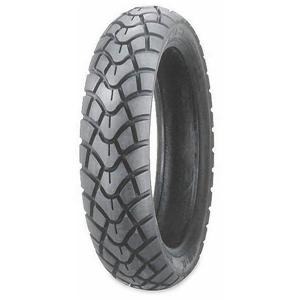
    A couple days before leaving for Tennessee I decided I wasn’t comfortable with the tread on my back tire and had a new tire put on. I had been reading good things about the Kenda K761 and decided to try one instead of the Metzeler Tourance tires I have already had. The big reason being the price difference.

    I called around and found the tire at a local motorcycle dealer and took my wheel in to have it put on. I brought it home and put it back on the motorcycle, put all the tools away, and was washing my hands when the phone rang. It was the motorcycle shop telling me the parts guys had just brought the service department my new tube. The tire had my old tube in it. Not good.

    Despite the fact I was running out of time I took the wheel back off, went back to the motorcycle shop the next morning and once again got the tire mounted but this time with a new tube as well. Good grief, what a fiasco.

    So after spending the night in Tallulah, LA imagine my surprise when I found my rear tire totally flat the next morning.

    I tried my air compressor and it was dead. Great. A tire shop up the road sent a truck and when the guy aired up the tire it immediately deflated again. At least he only charged me $10.

    The nearest motorcycle shop was 15-20 miles back in Vicksburg, MS. They would help me, but they were going to charge me $230 t0 come get the bike and then put in a new tube. I felt a little taken advantage of, but didn’t see what other options I had since the motorcycle couldn’t be ridden and I had no way to get the wheel to them.

    The owner himself came to get me and I was relieved when he showed extreme care loading and tying down the bike on the trailer. He ended up being a really nice man and we had fun talking on the way back to the shop.

    When they got the tire off they found multiple folds in the tube – the tube was so big for the tire it folded over and the worst of the folds wore through causing an almost half inch opening in the tube. No wonder it wouldn’t hold any air.
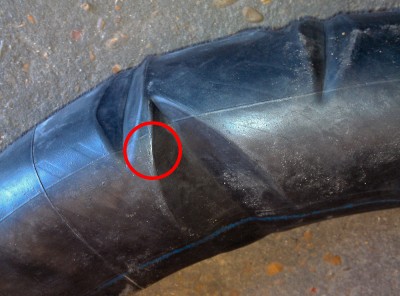
    I was in shock at how badly folded the tube was and that it clearly was too big for my tire.

    They checked the rim strip and their guess was that it was the original because it was worn through in more than one spot. While It hadn’t caused any leaks in the tube it clearly should have been changed along with the tire. It only added to my disbelief.

    The red circle on the picture to the left it the tear that was leaking.

    The two men who worked on the bike showed me the proper way to put a tube in tire to avoid damaging it when putting the second side of the tire on the rim. They showed me that it was the correct size.

    They had noted the mileage on my bike and asked what I did for a living. I told them I had been a career accountant and they found it very funny that a female accountant was traveling all over the place on a motorcycle. They were really great and had a good time giving me a hard time about things and started asking when I was going to the Arctic Circle.

    They took great care getting the wheel back on the bike (no broken ABS ring) and showed me some things to do to make it a little easier. All in all a good learning experience.

    Yes, I still think $230 was a little pricey. But they took really good care of my motorcycle and me and in the end I think it was worth every penny just to get back on the road confident of my back tire and tube. These folks need to make a living too and the owner alone spent 2 hours on my motorcycle plus the other tech who assisted.

    So if you have motorcycle problems in the Vicksburg area I would call Mike and Kay at Vicksburg Cycles. They sell Kawasaki and Suzuki motorcycles, but worked on my BMW. Was that why they charged so much? Just kidding.

    The guys suggested I bring the tube home with me and take it back to the dealer who mounted the tire originally. I think I will take it in and talk to the owner. It’s not just the expense and the inconvenience of having a flat on the road, I feel they did something that had the potential to kill me. I feel very lucky the tube went flat overnight and not when I was going 80 MPH on the highway.

    So all told the cost of the tire, new tube, mounting, and then replacement of the tube in Louisiana was $405. For one tire. So far my switch to Kenda hasn’t saved me a whole lot of money. I think that tube may qualify as the most expensive tube of all time.

    So now I’m rethinking my three tools for changing tires at home – maybe mounting tires is something I need to learn to do myself. At least then I’d stand a chance of having the proper size tube and the rim strip changed when it was worn. And maybe I could make a trip without having to stop for repairs.
  • Suspension and wheel bearing maintenance

    Reading the FAQs on F650.com left me scratching me head wondering if I could even change the swing arm and wheel bearing on my 2007 F650. Heating and freezing things, lots of hammering with big hammers – it sounded like an almost impossible task.

    For anyone contemplating this maintenance, at least on my era of F650, don’t be put off by the descriptions in the FAQs because that isn’t at all how the maintenance went for me. Just for the record – I had to get male assistance with a couple parts of this job since I wasn’t strong enough.

    Swing Arm and Suspension Bearings

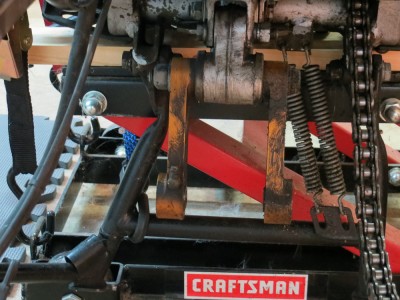
    swing arm links and dogbone
    swing arm links and dogbone

    The suspension bearings were no big deal at all except for getting the swing arm bolt out. I don’t know why it wouldn’t budge – maybe the steel bolt had fused to the aluminum engine, or the swing arm bushings were rusted onto the bolt, but it took a lot of penetrant and a male swinging the 8 lb. sledge hammer to make the bolt come loose.

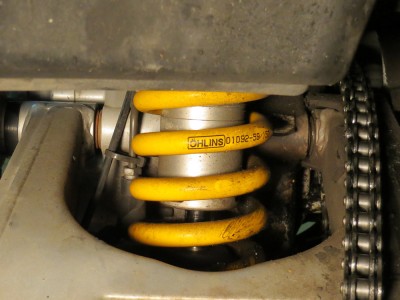
    The bearings on the dogbone and links were in great condition so I only needed to clean and grease them, but I had recently purchased Kouba links to compensate for putting on Ohlin shock on my lowered F650 so these parts had weren’t in original condition.

    Their good condition was contrasted by the swing arm bearings that spilled out broken needles when the bushings were removed. Yes, I was way, way overdue on this maintenance. Unfortunately the broken needles had scored the bushings and they needed to be replaced along with the bearings.

    swing arm bushings and bolt
    Note the rust on the left side, but no rust on the right

    The guys at Purvis Bearing, where I purchased all my bearings and seals, were so great about educating me that I asked them if they knew of a good machine shop that might help me get the old bearings out and put the new ones in. They directed me to a shop with a wonderful owner who used an arbor press to remove the bad bearings and put my new ones in and charged me $20. It was painless. It took me longer to drive to the shop than it took to do the bearings and he let me help so I learned about the entire process for the next time around.

    A note on going to a machine shop: they do this kind of thing all day every day and their level of comfort and expertise was perfect for someone who was a total and complete newbie. They answered all my questions and I left a lot more knowledgeable than I arrived.

    The only thing I screwed up on was not getting an accurate measurement of how recessed the swing arm bearings were before removing them. Because I failed to do this I had to adjust the bearings a couple times using my vice at home before the swing arm would go back on the motorcycle.

    I couldn’t get the swing arm back in place solo, but everything reassembled easily after that. The swing arm maintenance is simple bolts and bearings.

    Wheel and Sprocket Carrier Bearings

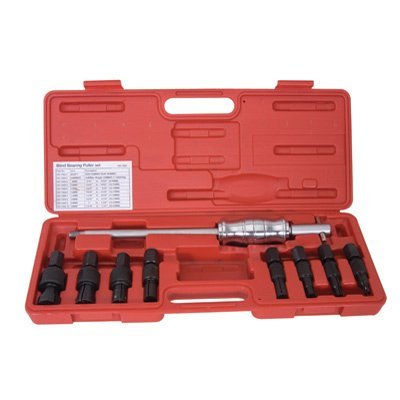
    Next it was the wheel bearings. I have three words to say: TUSK BEARING REMOVER. I talked a friend into going halfsies on this $90 tool and we both ended up thinking it’s worth every penny. After reading the FAQ on wheel bearings I wasn’t sure I could do them. This tool made the removal of the old bearings no big deal at all — so in my humble opinion it’s the ONLY way to go. No heating, no trying to find a proper sized drift, no pounding with a hammer. It hooks the bearings and just yanks them out. Again – something I needed male assistance with.

    Tusk Bearing Remover at Rocky Mountain ATV

    I took the wheels and sprocket carrier back to the machine shop for insertion of the new bearings and when I saw how easily it went I probably could have done it myself. I’m not sure why the FAQ talks about heating the hubs and freezing the bearings. We greased up the bearings and gently hammered them in with a rubber coated hammer and drift. I took step-by-step details on how the various parts had to go together so all the circ-clips and spacers went in properly.

    The thing the machine shop provided that I didn’t have was an assortment of huge sockets that were the proper size drift for pounding the bearings in, so in the end it boiled down to paying them $20 or buying the huge sockets that would catch the outside race of the bearing – sockets I would have no other use for. Your call on that one, but I’ll probably go to a machine shop the next time.

    I took the sprocket carrier and wheels home and got everything back on all by myself. Finally – something I didn’t have to get help on.

    FYI – I asked the guys at Purvis how long my Timken wheel bearings should last and they told me they are rated for 10,000 hours, but that doesn’t factor in the bumps they taking going down the road.

    Wrap Up

    Just for fun I called a dealer and asked the service guys how much it would cost for them to do all the bearings and I was quoted $1600. I spent a total of $320 — $215 for bearings and bushings, $40 for the machine shop, $20 for grease, anti-seize, etc, and $45 for my half of the Tusk Bearing Remover. This maintenance is extensive, but if I can figure it out anyone can. When I found out my efforts were saving me $1300 it made the work very worthwhile. Besides, the more I learn about my motorcycle the more comfortable I am with it 🙂

  • Auxiliary Light Install

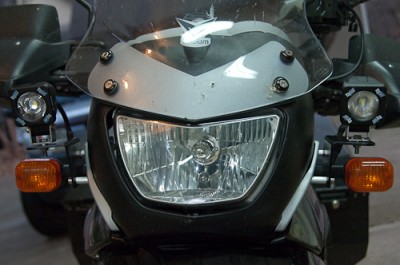
    After a long, long search I finally decided on some auxiliary lights for my F650 GS. I have wanted them for a long time for improved conspicuity during the day as well as being able to see better at night. The OEM F650 headlight is pretty sad. They make a motorcycle that get take you anywhere but you just aren’t able to see where you are. I had already upgraded to an HID headlight, but I still have wanted more light.

    Power draw was a big consideration since the 650 doesn’t have the strongest alternator and I already run a lot of electrical accessories like heated gear, radio, GPS while riding. But cost was a big factor too — I would have loved to get Touratech lights but there was no way that would fit into my budget.

    I stumbled across a post about Vision X Solstice Solo 2″ light pods that only draw 10 watts of power each but appeared to deliver a decent amount of light. It was a confusing purchase because they are sold in four different versions — narrow, medium, wide and elliptical beams — and when I call Vision X two times with questions I got conflicting information.

    I decided on the narrow beam for the right side since it would pierce the darkness the farthest on the side of the road and the elliptical on the left so it wouldn’t bother oncoming traffic.

    http://www.visionxusa.com/LED-Solstice-S1100/c1_48_88/index.html

    Great. I had finally made the decision on what lights I wanted. Now how the heck was I going to attach them to the motorcycle?

    I really wanted something like the Touratech brackets, but they aren’t allowed to sell those separately. I looked at a lot of different options, talked to a lot of people, and finally found the perfect brackets at BLM Accessories made specifically for the F650.

    http://www.blm-accessories.com/BikeModels.cfm?Model=F650

    Bill McAvan at BLM was great to deal with — if they didn’t fit or I didn’t like them he said I could send them back. Bill ships them with a variety of spacers so getting them positioned exactly where I wanted them was easy.

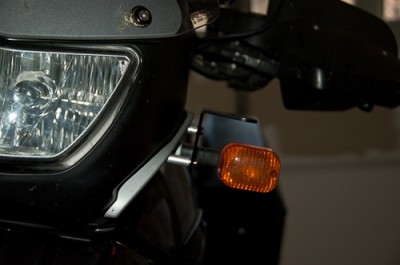
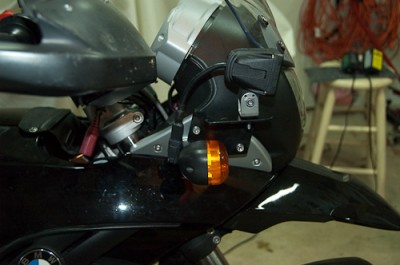
    My only concern is they are just one more thing that will have to come off if the plastic needs to be removed, but I didn’t like any of the options that didn’t involve the turn signals and I really wanted the lights high up.

    When I was happy with the brackets I ordered the lights from Accessory Partners. I ordered the two lights, a supposedly waterproof switch (I hope it is), and their wiring harness. Not a great purchasing experience. They told me the lights would ship on Monday, but they didn’t send them out until Friday and I wasn’t able to get an answer when I called and emailed them.

    I laughed out loud when I saw the wiring harness — way, way too much wire and crap to fit on my little F650. I returned the harness and made my own.

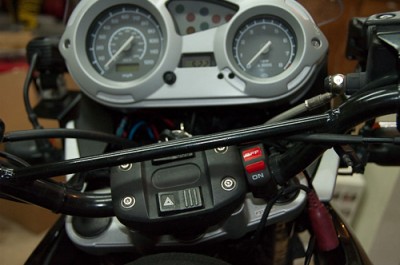
    There was a warm day between Christmas and New Year so I went out to give the F650 her Christmas present. It ended up being an all day project, but that’s because of my choices. I wanted parts to be removable and installed connectors so the switch or the lights could be individually removed from the install.  I mounted the switch on the handle bars where it would be out of the way. I decided to drill small holes in the turn signal brackets to feed the wires through for the lights so the wires wouldn’t have to run on the outside of the plastic from the headlight area.

    I was careful to use blue Loctite after reading a couple posts where the mounting nuts for the lights vibrated loose.

    The lights are infinitely adjustable up and down and side to side — I’m hoping that doesn’t end up driving me crazy. I think I have them adjusted so they won’t point at oncoming drivers and will still light up the road  and the side of the road for me. I will need to see how they’re positioned for another rider in front of me though.

    The difference in light is pretty impressive for 10 watt LEDs but I won’t be able to really comment on how I like them until I take them on a trip and right now that’s sounding like April. At the moment my driveway is a sheet of ice my SUV won’t go up, so the motorcycle isn’t going anywhere.

    When the weather improves I’ll get pictures of just the headlight and then the headlight with the LEDs to show what the difference is.

  • Ohlin shock + Kouba links for lowered F650 GS

    As I mentioned before my trip out to California in May I had gotten an Ohlin shock put on right before leaving. I kid you not, when the shock was first put on I could no longer look down into my top case — I needed a step stool to do that. That’s how much higher the tail end of the motorcycle was. Leaving for California was delayed because I could barely touch the ground with my toes on the ground so I postponed departure and the shock was  rebuilt, shims added, and made as low as it could go.

    It was still problematic. I could only get my toes on the ground (which I don’t like). It was a little better when the motorcycle was fully loaded, but not much. The motorcycle leaned so much that I couldn’t get it off the side stand when it was loaded. I left town with an inch thick block of wood on a string to put under the side stand. I found this embarrassing right up until I stopped for coffee in Albuquerque and could not get the bike off the side stand and had to go back into the coffee shop to ask someone for help. Great way to meet people, but more embarrassing than using the block of wood.

    I ended up talking to Ohlin the last couple weeks and since they don’t make a shock specifically for the lowered F650 GS, the best they could offer was to take the shock back and give me a full refund. They cheerfully offered to take their shock off, but another shock on, and give me my money back. I was pretty impressed with their customer service, but this would leave me with the only option of an OEM BMW shock, which I feel is of lesser quality and $300 more in price. I wanted to find a way to keep the Ohlin.

    I posted on F650 forum and got several suggestions. I didn’t think a $300 lower seat would help enough, I wasn’t about to spend another $400 to get boots that are 3/4″ higher, but several people mentioned Kouba Links.

    I checked koubalink.com for a phone number and found there was only an email address. I suspected this didn’t bode well for getting information, but I was wrong. I sent an email and got a response from Norm Kouba within a couple hours. Norm was informative, he was helpful, and I could have hugged him. I didn’t know what the “factory lowered” consisted of and had no idea if my links were a different length from the standard F650 GS. Norm knew my links were the same as the standard.

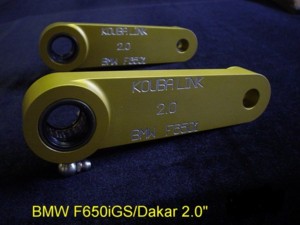
    Koube Links
    Koube Links (from their web site_

    Norm suggested I put 2 x 4 boards down on either side of the motorcycle to get a feel for what the 2″ links would do since the boards would be 1 3/4″ of added height. I felt strongly that I only needed 1″ so he allowed me to order both the 1″ and 2″ links with the understanding the ones that didn’t work would be shipped back for refund.

    This Sunday I put the 1″ links on my motorcycle. I still don’t understand the geometry since the links were only a 1/2″ longer than the OEM links, but I was on tip toe before the Kouba Links and I have most of my foot on the ground after. While I greased the heck out of them before installing, Kouba links come with zerks so in the future the bearings can be greased with a grease gun while installed on the motorcycle.  How cool is that?

    I mailed the unused 2″ links back to Norm on Tuesday (priority mail) and had my refund by Thursday. I can’t say enough good things about my experience with Norm Kouba. It was such a pleasure to deal with someone who still values the concept of customer service. He has lowering links for a lot of different motorcycles so I suggest you check out his web site if  you’d like your motorcycle a little lower.

    http://koubalink.com/

    I think I was very lucky with both companies, since they were both so helpful. Hopefully the new links will allow me to have the best of both worlds — great Ohlin suspension and my feet almost flat on the ground. I’ll report back on what I think when I get back from Vermont.

  • An overdue thank you to Haakon

    I realized I have been negligent in making a thank you here to a new friend who has been helping me with a project.

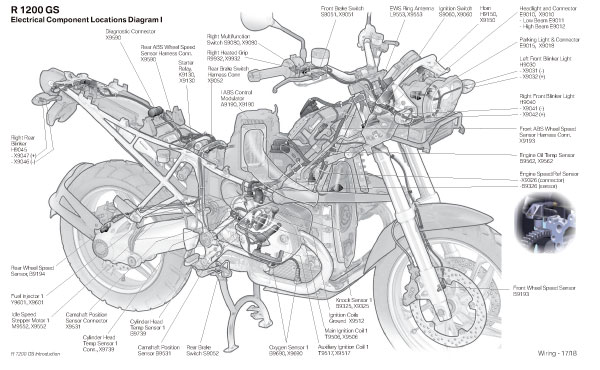
    When Jean-Francois purchased his R1200GSA last June there were all these neat documents available for the care of that motorcycle. One in particular caught my interest because it seemed like such a good idea.

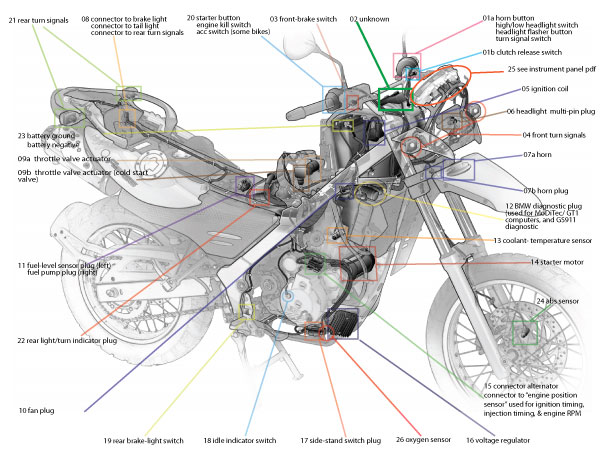
    How cool is that? All the electrical parts identified with where they are located on the motorcycle. Okay — there are some

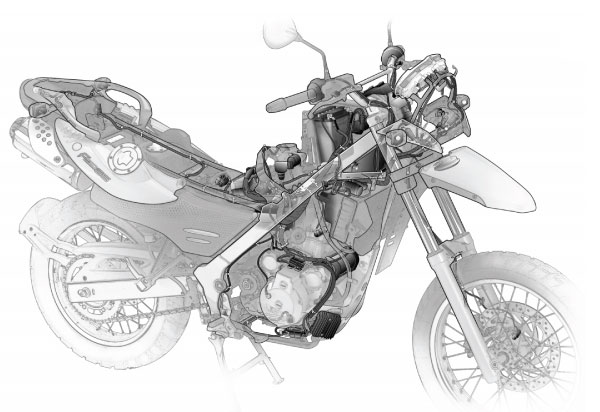
    This is what BMW produced for the F650GS

    Anybody other than me notice a slight difference between the two documents?

    When my motorcycle stopped running in Brownwood, TX on the way to Big Bend National Park in March I called the dealer asking for help in diagnosing what had happened. I was told to call roadside assistance and have it towed to the nearest dealer. This is not an acceptable solution for me.

    When I returned home I posted on the Chain Gang Forum on F650.com asking for steps in diagnosing why a motorcycle would stop running. How to determine if it was spark, fuel, or air and then trace it to the source of the failure.

    Haakon (his post name — I don’t know if it’s his real name) responded to that post more than one time all the way from Norway. I contacted him directly and asked how he’d feel about helping me add labels to the above image and he’s been working with me since on that project that has now expanded to other things like referencing the pages in the repair manual . This is what Haakon and I have come up with so far (it’s a work in progress we plan to complete when I get back from the ride to California).

    I ask again — how cool is that?

    My plan is to print both the left and ride side images with labels and carry with me on the motorcycle. I always carry my laptop with the repair manual (I’ll also have backups of these images), so hopefully the combination of the two will help me solve problems that come up. We also plan to share it with the members of the F650 forum.

    Bottom line — Thank you Haakon for being so willing, so helpful, and so fun with this project. I wouldn’t have gotten much of anywhere on it without your help.